Do you know what is happening in your hive — without having to open it.

Monitor hive weight, temperature, humidity and colony activity remotely. Your bees remain undisturbed while you stay informed.

Our customers

Why choose us?

Better beekeeping starts with understanding what is happening inside the hive.

Since 2016, we have focused on simple, practical and bee-friendly approaches to beekeeping. Our goal is to give beekeepers reliable information about their colonies and help them make better decisions based on real data.

Important

If you’re looking for answers that can improve the way you care for your bees, understanding what is really happening inside the colony is essential.

01
Bees have existed on our planet for approximately 150 million years.
02
Human activity and changes in ecosystems have significantly affected the conditions in which honeybees live.
03
Today, many honeybee colonies depend heavily on the care and protection provided by beekeepers.
04
Healthy bee colonies are important not only for beekeeping, but also for pollination and the wider ecosystem.

Our monitoring technology is designed specifically to simplify the beekeeper’s work and provide a clear overview of the condition and development of each colony.

Important changes can be monitored without unnecessary hive inspections. The monitoring is non-invasive, residue-free and safe for the bees. It can be used throughout the year, including during the honey season.

Bee Hive Monitoring application
What we monitor

Important hive data. All in one place.

Follow the most important changes inside and around your hive without unnecessary inspections.

⚖️

Hive Weight

Track hourly, daily, weekly and monthly weight changes to understand honey flow, food consumption and colony development.

🌡️

Temperature & Humidity

Monitor conditions inside and outside the hive and follow changes that provide useful information about colony activity.

🌦️

Atmospheric Pressure

Follow atmospheric pressure and weather-related changes around your apiary.

🐝

Forager Activity & Queen Presence

Monitor colony activity and indicators related to queen presence to better understand colony condition.

🚨

Hive Disturbance

Detect unusual hive activity or disturbances so you can react when attention may be required.

🔊

Swarming Indicators

Sound changes inside the hive can help identify behaviour associated with preparation for swarming.

🔋

Battery Status

Keep track of device battery levels to help maintain continuous monitoring.

📊

Colony Comparison

Compare colonies and identify differences in strength, development and productivity across your apiary.

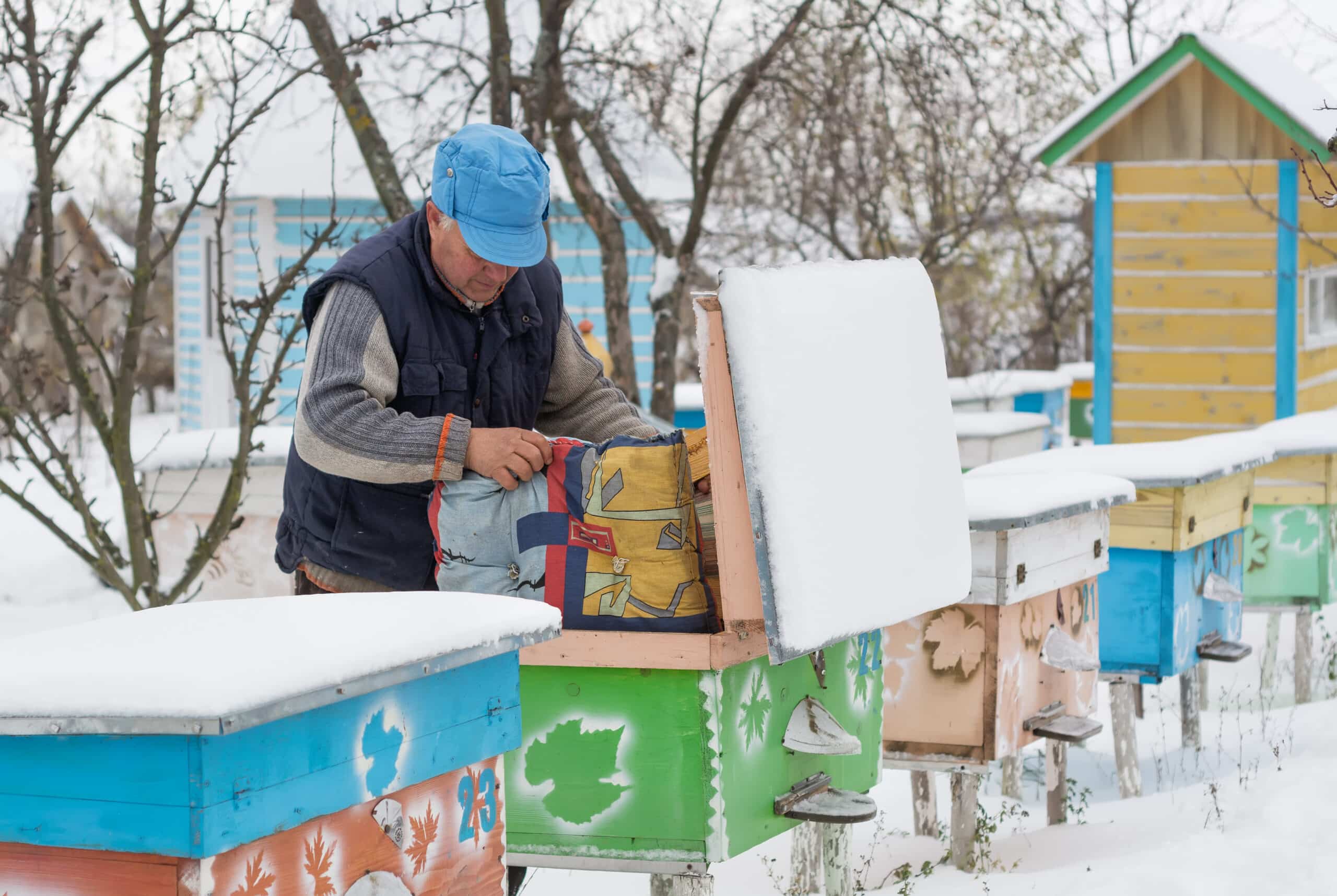
Do you know what your bees are doing during the winter? Monitoring allows you to follow important changes even during periods when opening the hive is undesirable.
PREVIEW • REAL HIVE NO. 1

Our apiary in real time

Interactive data and charts from the Bee Hive Monitoring system.
● LIVE DATA
WEIGHT49.5 kg+0.13 kg / 24 h
TEMPERATURE11.4 °Coutside 10.1 °C
HUMIDITY62.7 %outside 59.2 %
PRESSURE1000 hPahive surroundings
SOUND62.3amplitude 0
BATTERY STATUSInternal 50% · External 95% · GSM 67%device power status
Hive weight49.5 kg • +0.13 kg / 24 h
7 days
50.049.048.0 18 Oct20 Oct22 Oct24 Oct
Humidity62.7% in the hive • 59.2% outside
7 days
706050 18 Oct20 Oct22 Oct24 Oct ● Scale ● Hive Heart
Hive soundfrequency 62.3 • amplitude 0
7 days
300200100 18 Oct20 Oct22 Oct24 Oct
Atmospheric pressure1000 hPa
7 days
10401000960 18 Oct20 Oct22 Oct24 Oct
Time period: customers can switch the chart period directly in the application between hour, day, 7 days, month and year. The chart controls allow them to zoom out, reset the view or zoom in.
Common beekeeping challenges

Are you and your bees struggling with any of these problems?

Beekeeping often comes with more questions than clear answers. Better information can help you understand what is happening before a small problem becomes a bigger one.

👑

Queen Bee Issues

  • Unexpected queen loss
  • Difficulty introducing a new queen
  • Failure of the colony to raise a new queen
  • Queenless colonies and laying workers
🐝

Bee Behavior Issues

  • Susceptibility to robbing
  • Tendency to swarm
  • Aggressive behaviour towards people
  • Aggression during hive inspections
  • Reluctance to build comb
🍯

Honey Production Issues

  • Low honey production
  • When, what and how much to feed
  • How to support nectar collection
  • How to recognize when nectar flow has started
🦠

Health & Disease Issues

  • Persistent problems with Varroa mites
  • Choosing the right time for treatment
🌦️

Weather & Seasonal Issues

  • Winter or year-round colony losses
  • Slow spring development
  • Hive damage after storms
  • Checking whether colonies are doing well during winter
🛠️

Hive & Equipment Questions

  • Which type of hive to choose
  • Which frame size to use
  • Insulated or non-insulated hive?

Is beekeeping exhausting, expensive and sometimes frustrating?

Climate, hive type, equipment and bee strain all play a role, but they do not tell the whole story. Before assuming that colony problems are unavoidable, look more closely at what is actually happening inside the hive.

There is still hope.

Better information helps you identify problems earlier, understand their causes and make more informed decisions.

Myths & facts

Don’t let common beekeeping myths make decisions for you.

Beekeeping is full of traditions, opinions and conflicting advice. Open each topic below to read more.

Myth #1“An insulated hive is always better.”
FACT: Some beekeepers use insulated hives while others prefer non-insulated designs. Both approaches have advantages and disadvantages. Hive design alone does not determine colony success.
Bee hive
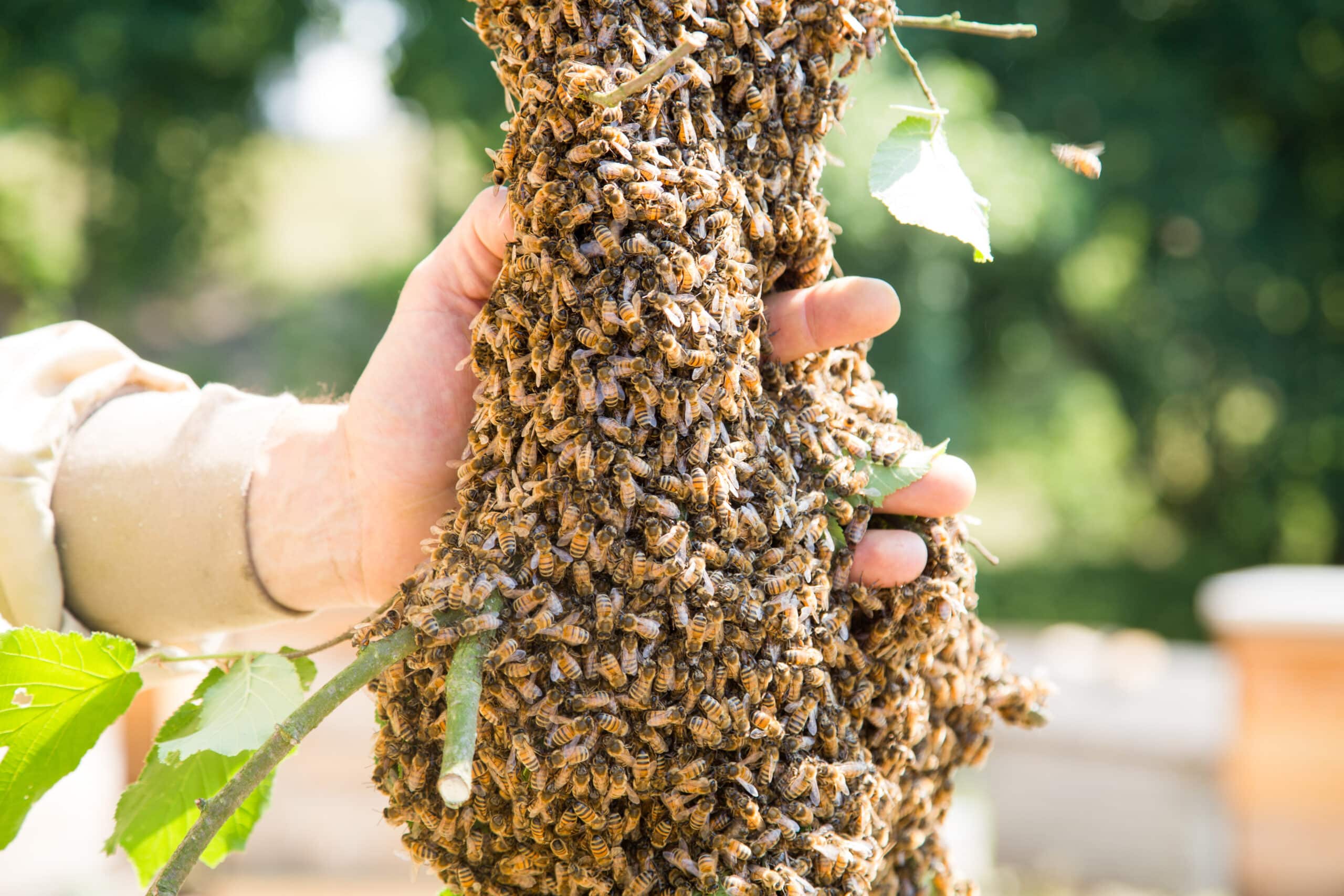
Myth #2“A swarming queen will produce offspring that tend to swarm.”
FACT: Swarming behaviour is influenced by many factors. A queen having previously swarmed does not automatically mean that all of her offspring will show the same behaviour.
Swarming bees
Myth #3“Aggressive colonies produce more honey.”
FACT: Temperament and honey production are not the same thing. A colony does not need to be aggressive to be productive.
Honey
Myth #4“Bees should never be opened in winter.”
FACT: Winter inspections should always be approached carefully, but temperature alone is not the only factor affecting the colony. Vibration, prolonged disturbance and disruption of the winter cluster can also cause significant stress.
Hive in winter
Myth #5“There shouldn’t be too many hives in one apiary.”
FACT: The number of colonies that an area can support depends on available forage, season, weather and management.
Apiary
Myth #6“An experienced beekeeper can always give me the right advice.”
FACT: Experience is valuable, but another beekeeper may not know the complete history of your colony, its previous behaviour or the interventions that have already been made. Objective measurements and long-term data provide context that cannot always be obtained from a single inspection.
Honeybees
Myth #7“Beekeeping is simply too difficult.”
FACT: Beekeeping can feel complicated when decisions are based mainly on assumptions, fear or incomplete information. Better knowledge and better information can simplify many everyday decisions.
Beekeeper working with bees
The real secret of bees

Stop guessing. Start observing.

A bee colony is a complex living organism. Many problems become difficult to solve when we only react to visible symptoms instead of understanding the changes that led to them. Monitoring gives the beekeeper objective information over time and helps reveal what is really happening inside the colony.


EXPLORE OUR SOLUTIONS

ALL PRODUCTS

Explore our complete range of hive monitoring products and accessories.

EN
0
LIVE CONNECTIONS
Updated automatically
Live connections
Loading live connections...
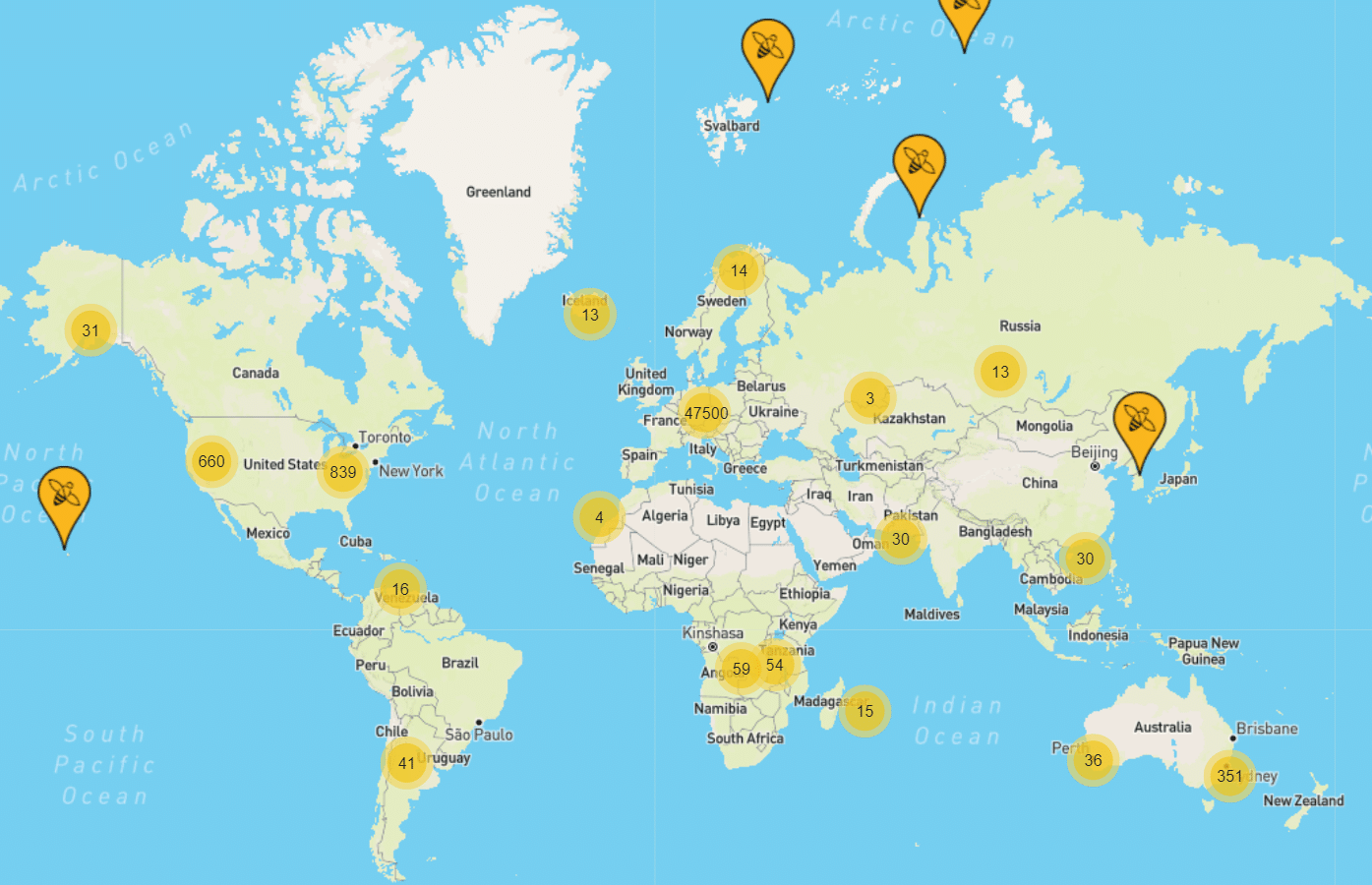
Carte Bee Hive Monitoring en Europe
Carte mondiale Bee Hive Monitoring
SIMPLE HIVE MONITORING

HOW IT WORKS

01

Install the device

Place the monitoring device inside or underneath the hive.

02

Data is transmitted online

Measurements are automatically sent to the Bee Hive Monitoring system.

03

Monitor your hive from anywhere

Check important hive data from your phone or computer without unnecessary hive inspections.

WE ARE HERE TO HELP

Have a question?

Need help choosing the right monitoring solution or setting up your devices? Send us a message — our team will be happy to help.

Why Bee Hive Monitoring?

Better beekeeping starts with knowing what is happening inside the hive.

Since 2016, we have focused on simple, practical and bee-friendly approaches to beekeeping. Our goal is to give beekeepers reliable information about their colonies and help them make better decisions based on real data.

IMPORTANT If you are looking for answers that help you care for your bees better, it is important to understand what is really happening in the colony.
01
Bees have lived on our planet for approximately 150 million years.
02
Human activity and changes in ecosystems have significantly influenced the conditions in which honey bees live.
03
Today, many colonies depend heavily on the care and protection provided by beekeepers.
04
Healthy colonies are important not only for beekeeping, but also for pollination and the wider ecosystem.
Our monitoring technology is designed to simplify a beekeeper’s work and provide a clear overview of the condition and development of each colony. You can follow important changes without unnecessarily opening the hive. The technology leaves no residues, is harmless to bees and can be used throughout the year, including during the honey harvest.
Bee Hive Monitoring application
What we monitor

Essential hive data. All in one place.

Track the most important changes inside and around the hive without unnecessary inspections.

⚖️

Hive weight

Track hourly, daily, weekly and monthly weight changes to better understand nectar flow, food consumption and colony development.
🌡️

Temperature and humidity

Monitor conditions inside and outside the hive and changes that can provide useful information about colony activity.
🌦️

Tlak vzduchu

Monitor atmospheric pressure and weather changes in your apiary.
🐝

Forager activity and queen presence

Monitor colony activity and indicators related to queen presence to better understand its condition.
🚨

Hive disturbance

Detect unusual activity or hive disturbance so you can respond when your attention is needed.
🔊

Swarming indicators

Changes in hive sound can help identify behaviour associated with preparations for swarming.
🔋

Battery status

Monitor device battery status to keep monitoring running continuously.
📊

Colony comparison

Compare colonies and identify differences in strength, development and productivity across your apiary.
Do you know what your bees do in winter?

Monitoring lets you follow important changes even when it is better to keep the hive closed.

Bees in winter
Common beekeeping problems

Do you face any of these problems?

Beekeeping often brings more questions than clear answers. Better information can help you understand what is happening before a small problem becomes a big one.

👑

Queen problems

  • Unexpected queen loss
  • Problems introducing a new queen
  • The colony fails to raise a new queen
  • Queenless colonies and laying workers.
🐝

Bee behaviour problems

  • Susceptibility to robbing
  • Tendency to swarm
  • Aggressive behaviour towards people
  • Aggression during hive inspections
  • Low willingness to build new comb
🍯

Honey production problems

  • Low honey production
  • When, what and how much to feed
  • How can nectar intake be supported?
  • How can the start of nectar flow be recognised?
🦠

Health and disease

  • Persistent Varroa problems
  • Choosing the right time for treatment
🌦️

Weather and seasonal problems

  • Colony losses during winter or throughout the year
  • Slow spring development
  • Hive damage after storms
  • Checking whether colonies are doing well during winter
🛠️

Hive and equipment questions

  • Which type of hive should I choose?
  • Which frame size should I use?
  • Insulated or non-insulated hive?

Is beekeeping exhausting, expensive and sometimes frustrating?

Climate, hive type, equipment and bee genetics all play a role, but they do not explain everything. Before accepting colony problems as inevitable, look more closely at what is really happening inside the hive.
There is always a solution. Better information helps you detect problems earlier, understand their causes and make more informed decisions.
Myths & facts

Don't let common beekeeping myths make decisions for you.

Beekeeping is full of traditions, opinions and often conflicting advice. Open the topics below to learn more.

Myth #1 “An insulated hive is always better.”
FACT: Some beekeepers use insulated hives while others prefer non-insulated designs. Both approaches have advantages and disadvantages. Hive design alone does not determine colony success.
Bee hive
Myth #2 “A queen from a colony that has swarmed will produce offspring with a greater tendency to swarm.”
FACT: Swarming is influenced by many factors. A queen coming from a colony that has swarmed does not automatically mean all of her offspring will show the same tendency.
Bee swarm
Myth #3 “Aggressive colonies produce more honey.”
FACT: Colony temperament and honey production are not the same thing. A colony does not need to be aggressive to be productive.
Honey
Myth #4 “Hives should never be opened in winter.”
FACT: Winter inspections should be carried out very carefully, but temperature is not the only factor affecting a colony. Vibrations, prolonged disturbance or breaking the winter cluster can place significant stress on the bees.
Hive in winter
Myth #5 “There should not be too many colonies at one location.”
FACT: The number of colonies a location can support depends on available forage, the season, weather and management practices.
Apiary
Myth #6 “An experienced beekeeper will always give me the right advice.”
FACT: Experience is very valuable, but another beekeeper may not know the full history of your colony, its previous behaviour or the interventions you have already made. Objective measurements and long-term data provide context that a single inspection often cannot.
Honeybees
Myth #7 “Beekeeping is simply too difficult.”
FACT: Beekeeping can feel complicated when decisions are based mainly on assumptions, concerns or incomplete information. Better understanding and better data can simplify many everyday decisions.
Beekeeper working with bees
The real secret of bees

Don't guess. Observe.

A bee colony is a complex living organism. Many problems are difficult to solve if we react only to visible symptoms instead of understanding the changes that led to them. Monitoring provides objective information over time and helps reveal what is really happening in the colony.
Bee Hive Monitoring logo
Menu
INTELLIGENT HIVE MONITORING

What we monitor

Real-time hive data helps beekeepers protect colonies, reduce unnecessary inspections and make better decisions.

⚖

Hive weight

Track nectar flow, honey stores and sudden weight changes with a precise hive scale.

🌡

Temperature and humidity

Monitor the hive microclimate remotely and detect unusual changes early.

🐝

Bee activity

Gain insight into colony activity without unnecessarily opening the hive.

▥

Complete hive monitoring

Combine weight, temperature, humidity and activity in one online system.

REAL BEEKEEPERS. REAL EXPERIENCE.

Trusted by beekeepers around the world.

From first-time beekeepers to experienced apiary owners — Bee Hive Monitoring helps people understand their colonies without unnecessary hive inspections.

★★★★★

“I am really enthusiastic about this system. It saves time and, most importantly, a lot of stress for the bees. Thank you!”

CLAUDIA · NORWAY
★★★★★

“I think your Hive Heart saved one of my colonies this winter.”

LESLEY · USA
★★★★★

“Direct and professional support. The best chat support I have experienced.”

STEFFEN · GERMANY
VIEW MORE REFERENCES →
SIMPLE HIVE MONITORING

HOW IT WORKS

01

Install the device

Place the monitoring device inside or underneath the hive.

02

Data is transmitted online

Measurements are automatically sent to the Bee Hive Monitoring system.

03

Monitor your hive from anywhere

Check important hive data from your phone or computer without unnecessary hive inspections.

EXPLORE OUR SOLUTIONS

ALL PRODUCTS

Explore the complete product range in our English store.

REAL HIVE. REAL EVENT.

40 kg disappeared in just 8 hours.

Hive weight dropped from 73 kg to 33 kg in only 8 hours. Without continuous monitoring, a change like this can happen before the beekeeper even notices a problem.

−40 KG / 8 HOURS
Hive weight graph showing a robbing event